
What the system does now
Field guideInteractive · 10 minutes
Learn how agents
earn the right to act.
Direct a working AI-native mission across context, specialist coordination, policy, human authority, and outcome evidence. Change the controls and watch the entire operating contract respond.
Demo environment · Synthetic operational data
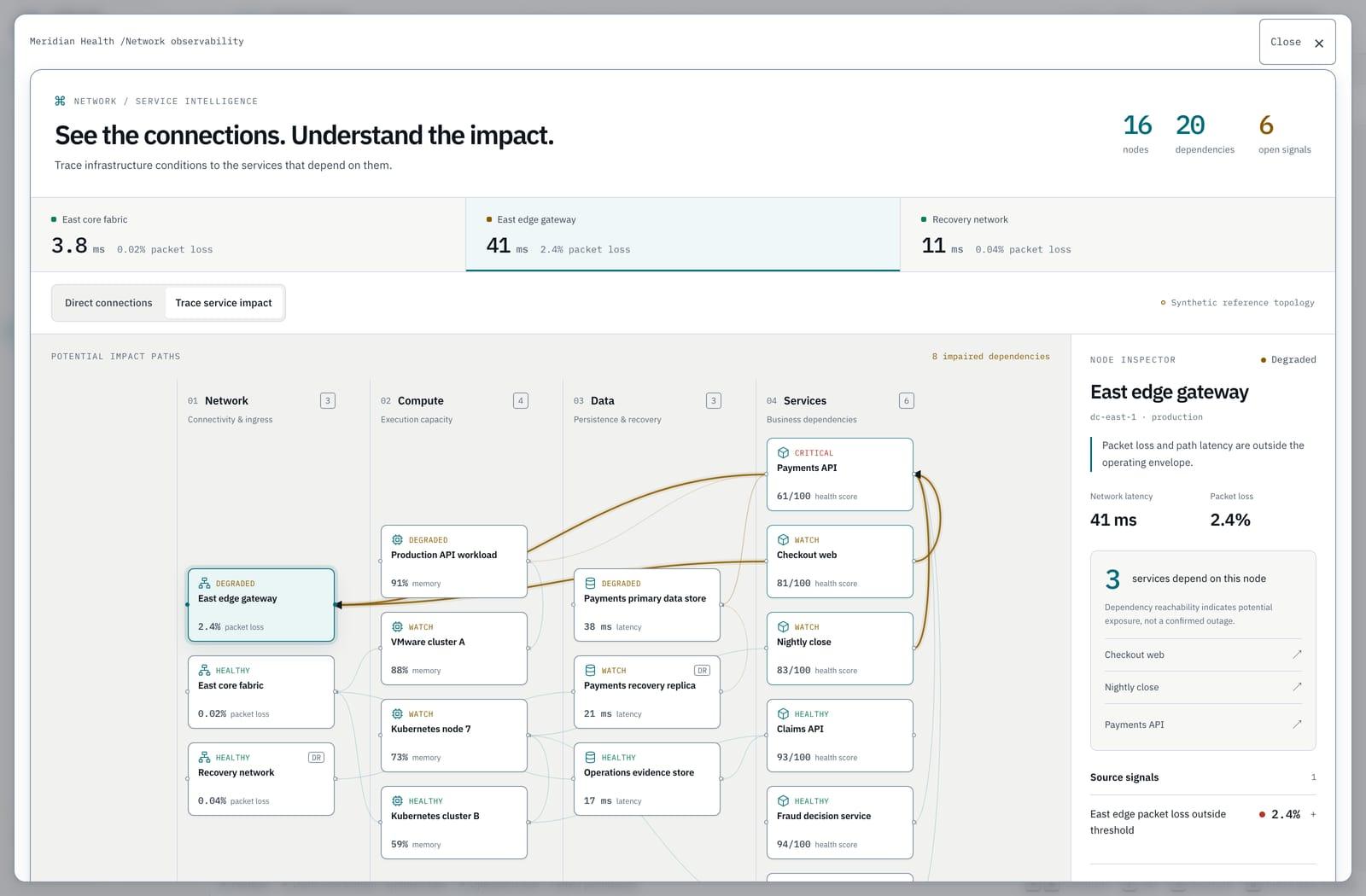
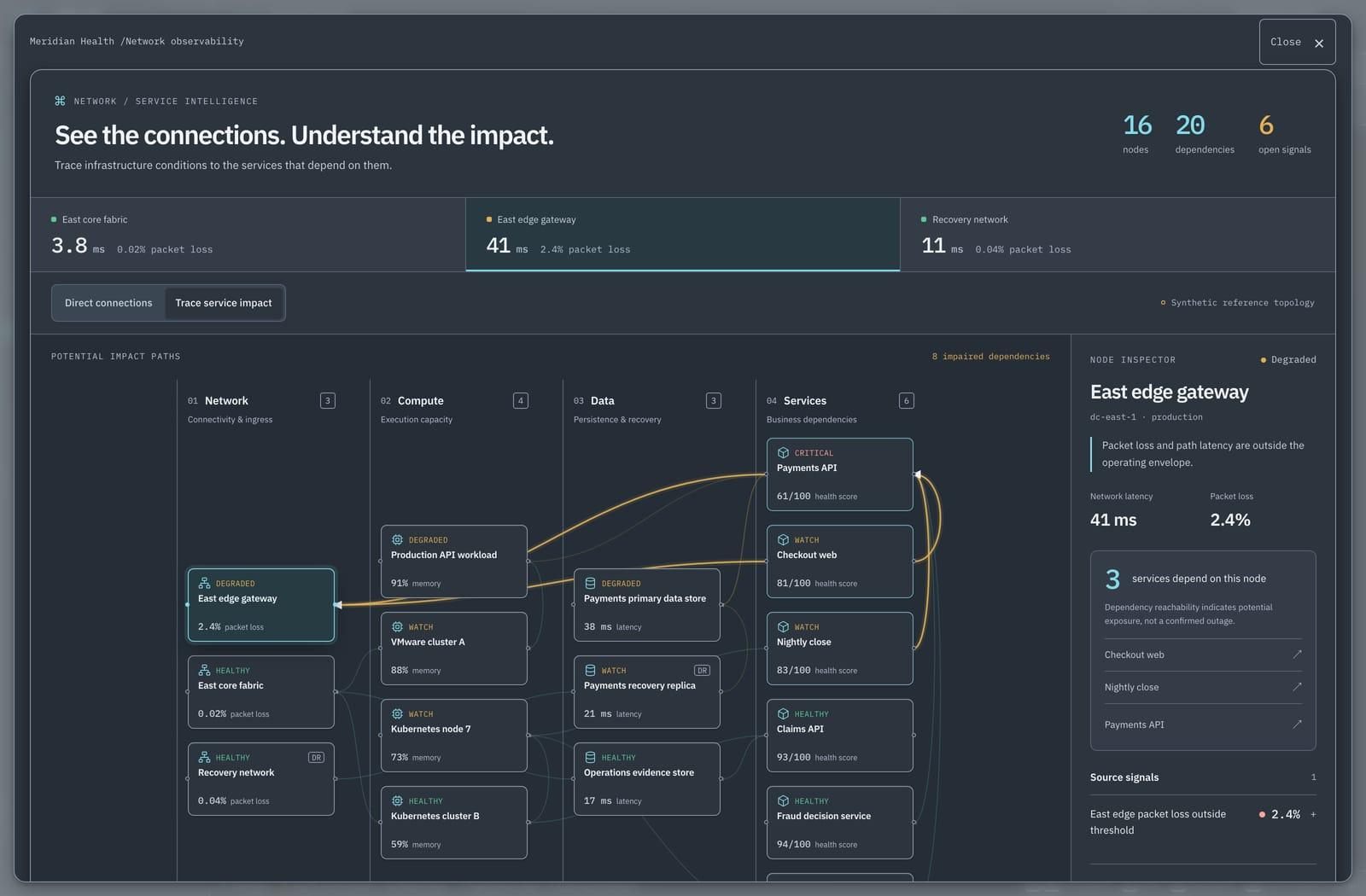
16 nodes observed20 dependencies traced6 signals open
01 Read an agent mission graph02 Separate autonomy from authority03 Diagnose a fail-closed state04 Follow evidence into a receipt
Interactive systems lab / claims recovery
Change the operating contract.
Tune autonomy, oversight, and operating conditions to recompute the mission graph, policy trace, human authority, and evidence state together.
Five stages, in order. Each stage shows its current state.
- 01Admit contextContext stewardComplete
Six typed source receipts
- 02Test hypothesesCausal investigatorComplete
Bounded recovery composed
- 03Apply policyPolicy guardianComplete
Proposal contract valid
- 04Human authorityDuty managerActive boundary
Named approval gate
- 05Verify effectOutcome verifierAwaiting authority
Awaits authorized execution
Human authority
The duty manager must approve before execution
The workflow pauses only at the consequential boundary, not during investigation.Evidence state
Proposal manifest · PM-3107
Binds typed inputs, agent tasks, human gate, rollback plan, and success criteria into one reviewable manifest.Policy trace
- 01Evidence sufficient
- 02Proposal-only authority
- 03Named approval required
Try this: choose Propose + Human on the loop. Observation preserves visibility, but it cannot quietly become approval.
The agent-first operating model
Four contracts make autonomy useful.
Each lesson opens the corresponding product surface. Learn the operating idea here, then inspect the same contract inside HELM.
01Context plane
Context is admitted, not scraped
Typed signals keep source, freshness, sensitivity, and lineage attached. Agents receive only the context their task and policy allow.
Inspect controls02Mission graph
Agents coordinate through contracts
Specialists have bounded jobs, tool access, inputs, outputs, and handoffs. The workflow is visible before its runtime receives work.
Open Workflow studio03Authority plane
Humans govern the consequential edge
A named approver can block an action. An on-loop observer can watch, challenge, and interrupt without becoming silent approval.
Take the guided tour04Evidence memory
Outcomes need receipts, not confidence copy
Execution, rollback, verification, and modeled-versus-realized value remain separate records so the operating case can be replayed and audited.
Inspect outcomesSpecialists, working together
Share the context.
Keep the authority clear.
A planned restart matters to more than one operator. Durable internal notices let an authorized specialist acknowledge the evidence and affected service without losing the original alert.
Explore the coordination modelImplemented coordination contractA planned change, with an accountable receipt
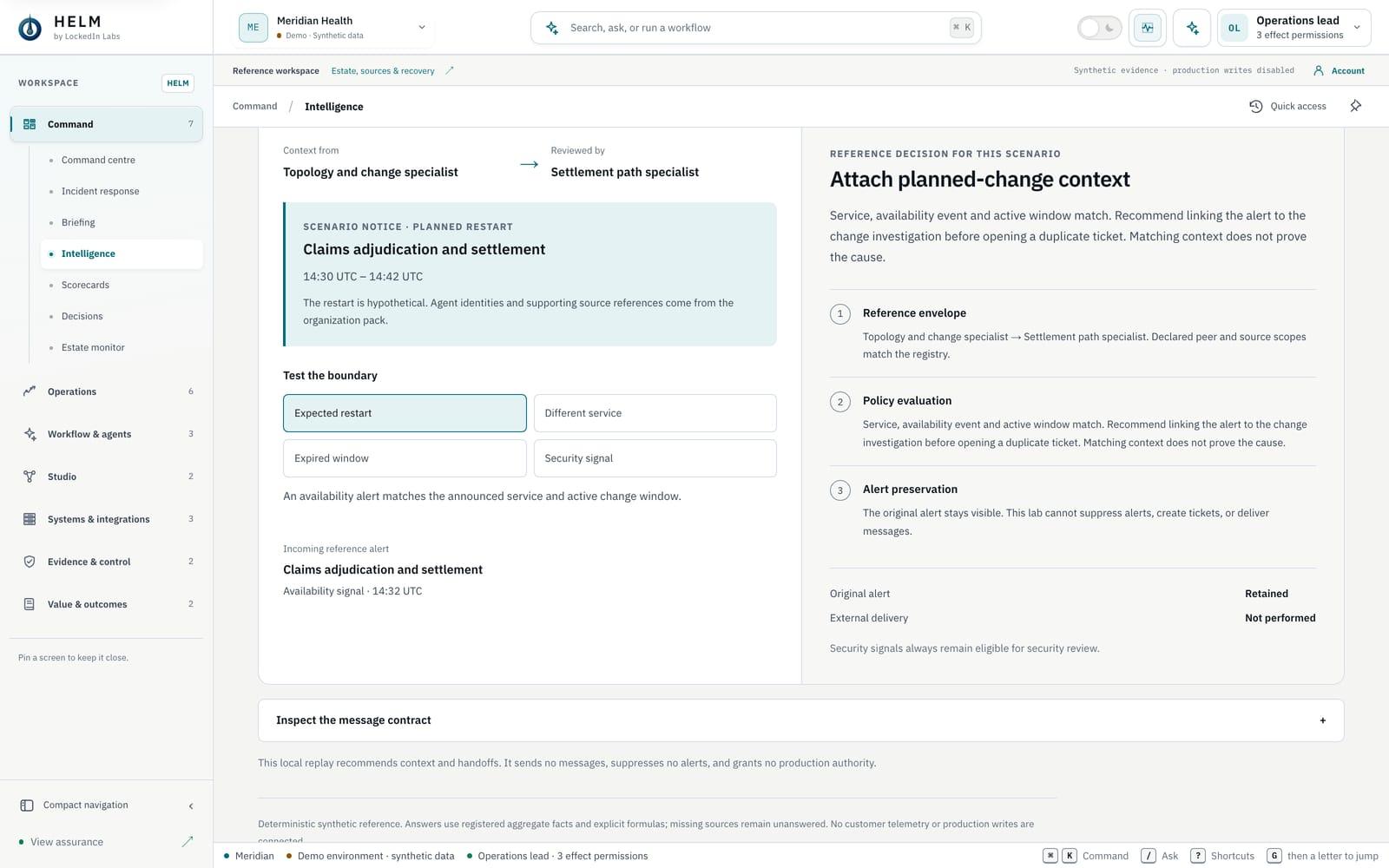
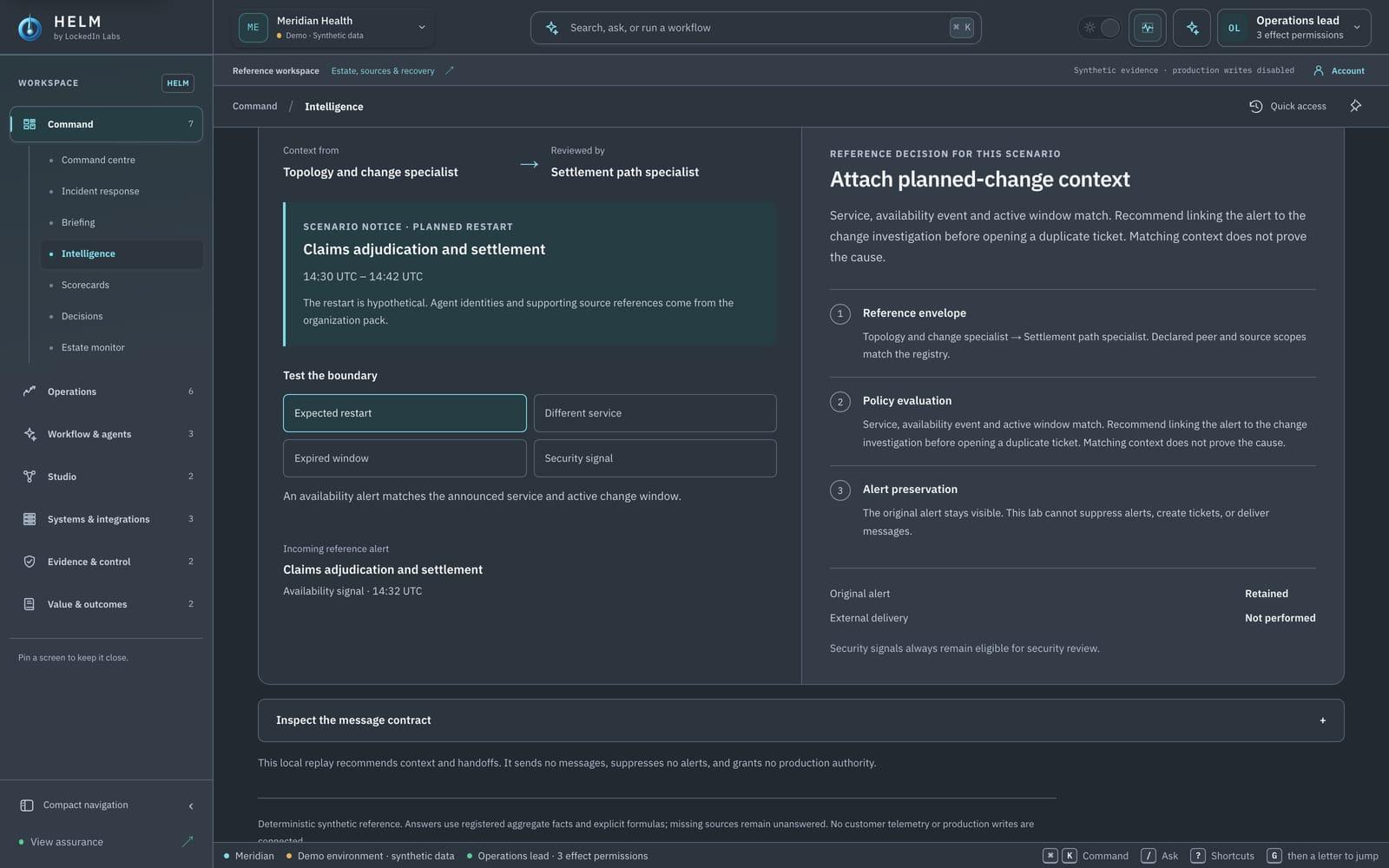
- 01Scoped notice
Name the service and the evidence.
The sender, recipient, tenant, source references and expiry are checked against server-owned policy.
- 02Durable acknowledgement
Recover the work after interruption.
Leases, exact retry identity and retained receipts let the internal worker resume without treating a lost response as new work.
- 03Current authority
Expire context when it stops applying.
Policy, source access and time bounds are checked again. A notice cannot grant its recipient more authority.
- 04Security federation
Preserve alerts and specialist ownership.
Security signals remain visible for specialist review. External SOC delivery and operational changes require separately accepted integrations.
One system / four ways to learn
Teach the operating model at each stakeholder's altitude.
Everyone sees the same governed objects. The question, evidence depth, and next action change with the role.
- 01Executive + investor
Why is this more than another copilot?
Follow one situation through bounded agent work, named authority, and an inspectable outcome chain.
Take the guided tour → - 02Operator + domain owner
Where does the human belong?
Place people at decision, exception, and interruption boundaries—not inside every machine-speed step.
Open Workflow studio → - 03Builder + architect
What makes the system agent-first?
Typed context, explicit tasks, tool contracts, durable handoffs, policy gates, and traceable artifacts form the runtime grammar.
Inspect the agent graph → - 04Risk + assurance
How does autonomy stay accountable?
Autonomy has a ceiling; identity, policy, evidence, human authority, and receipts remain distinct and inspectable.
Inspect governance controls →
Continue in the working product
From concept to governed execution.
Take the guided tour to follow one situation through admitted evidence, named human authority, a governed action proposal, and an inspectable outcome record.
Take the guided tour- The BriefingThe one prioritized situation and its business impact.
- Agent investigation replayHypotheses, tool calls, admitted evidence and receipts, step by step.
- DecisionsThe recommended option, the named person who owns approval, and the rollback posture.
- Incident responseAgents propose, people approve, and every effect is on the sealed record before it happens.